Crete: Myths and Minoans – Unveiling the Ancient Enigma

reachfar.org – Crete, the largest and most myth-laden of the Greek islands, is a land where the past is ever-present. It is here, amidst the rugged landscapes and the azure sea, that the ancient civilization of the Minoans thrived, leaving behind a legacy that continues to captivate the imagination of people around the world. The Minoan civilization, named after the mythical King Minos, is shrouded in mystery and legend, blurring the lines between history and mythology.

The Minoan Civilization: A Glimpse into the Past

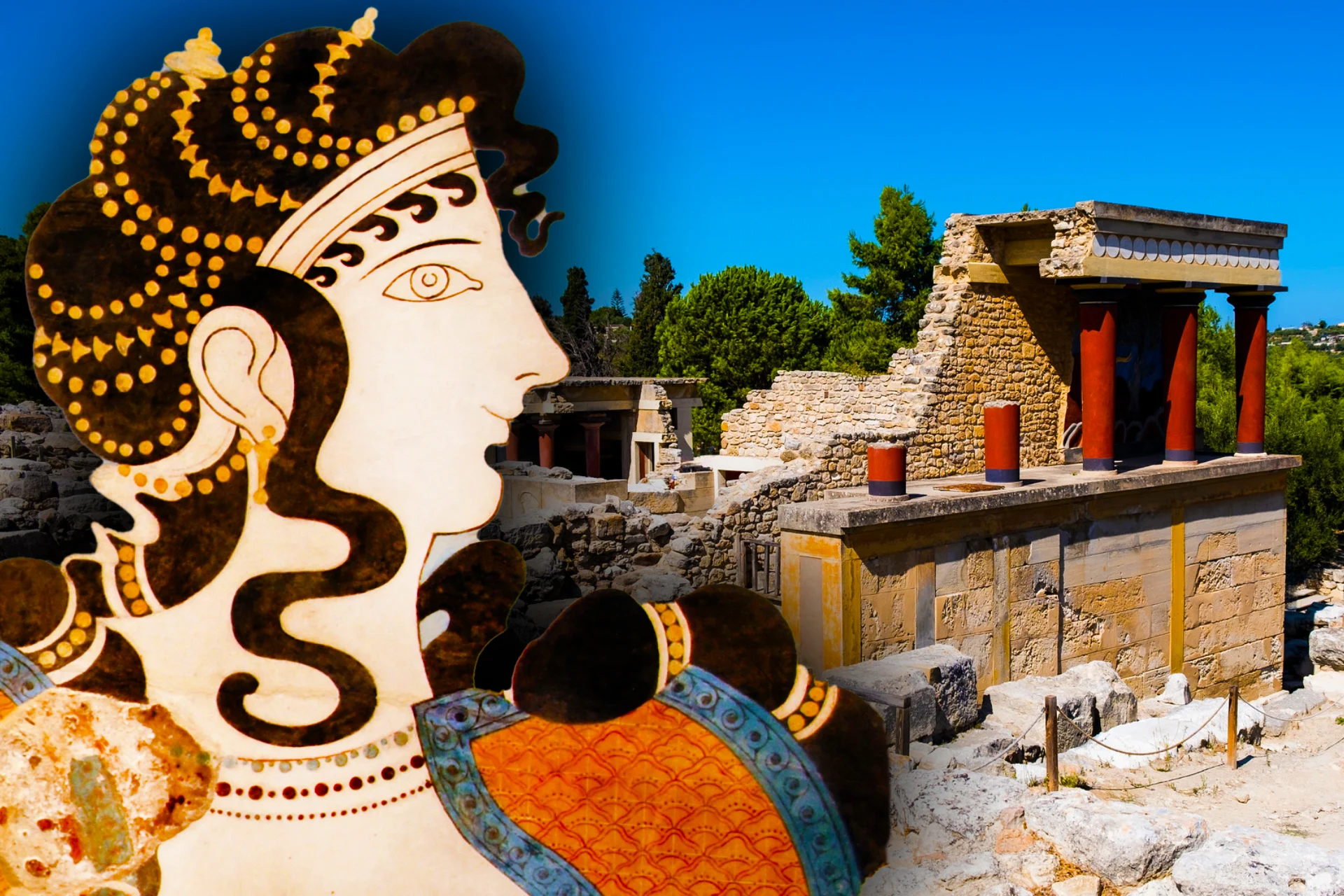
The Minoan civilization, which flourished from approximately 2600 to 1100 BC, is renowned for its advanced architecture, art, and culture. The Minoans were skilled sailors and traders, establishing a vast network of contacts across the Mediterranean. Their society was centered around palatial complexes, the most famous of which is the Palace of Knossos, believed to be the residence of King Minos and the mythical labyrinth of the Minotaur.

The Myth of the Minotaur

One of the most enduring myths associated with Crete is that of the Minotaur. According to Greek mythology, the Minotaur was a monstrous creature with the body of a man and the head of a bull. It was born from the union of Queen PasiphaĆ« of Crete and a magnificent bull, a curse inflicted upon them by the god Poseidon. The Minotaur was confined to the labyrinth at Knossos, where it was fed on the flesh of young Athenians sent as tribute to King Minos. The myth concludes with the hero Theseus, with the help of Minos’ daughter Ariadne, slaying the Minotaur and escaping the labyrinth.

The Legacy of the Minoans

The Minoans left behind a rich cultural heritage, evident in their art, pottery, and architecture. Their frescoes, characterized by vibrant colors and dynamic compositions, depict scenes from daily life, religious rituals, and mythological narratives. The Minoan artistry is a testament to their sophisticated aesthetic sensibilities and their deep connection to the natural world.

The Minoan civilization’s influence extended beyond Crete, impacting the development of other ancient cultures in the region. The collapse of the Minoan civilization around 1450 BC, likely due to a combination of natural disasters and invasions, paved the way for the rise of the Mycenaean civilization on the Greek mainland.

Exploring Minoan Crete Today

Today, visitors to Crete can explore the remnants of the Minoan civilization at numerous archaeological sites across the island. The Palace of Knossos, with its reconstructed facades and colorful frescoes, offers a glimpse into the grandeur of Minoan life. Other significant sites include the palaces at Phaistos and Malia, the sacred site of Palaikastro, and the Minoan town of Akrotiri on the nearby island of Santorini.

Crete’s rich tapestry of myths and history continues to draw travelers seeking to unravel the mysteries of the Minoans. The island’s ancient past, combined with its stunning natural beauty, makes it a unique destination that bridges the gap between legend and reality.

Conclusion

Crete’s myths and the legacy of the Minoans are a testament to the enduring power of storytelling and the human fascination with the unknown. The Minoan civilization, with its sophisticated culture and mysterious decline, remains an enigma that continues to inspire and intrigue. As we explore the remnants of this ancient world, we are reminded of the timeless connection between myth and reality, and the enduring legacy of the Minoans on the island of Crete.
The Cryptic Voynich Manuscript: Unraveling the Enigma

reachfar.org – The Voynich Manuscript, a mysterious and intricate codex discovered in 1912 by antique book dealer Wilfrid Voynich, has captivated the imagination of cryptographers, historians, and enthusiasts for over a century. Bound in vellum and adorned with an array of botanical, astronomical, and pharmacological illustrations, the manuscript is written in an unknown script and language that has defied all attempts at decipherment. This article delves into the history, content, and ongoing mystery of the Voynich Manuscript, exploring the various theories and efforts to crack its cryptic code.

The Manuscript’s Discovery and Description:
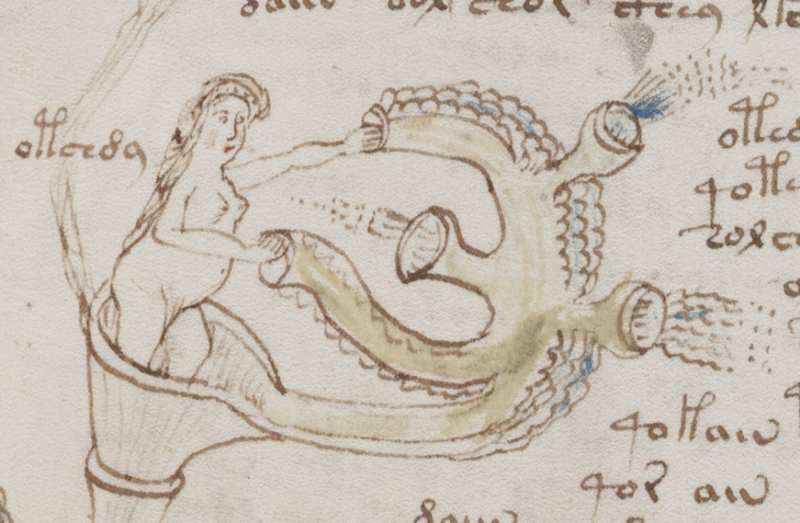
Wilfrid Voynich, a Polish book dealer, purchased the manuscript from the Jesuit College at the Villa Mondragone in Frascati, Italy. The book’s origins are shrouded in mystery, but it is believed to have been owned by Emperor Rudolf II of Germany, who purchased it from alchemist John Dee in the late 16th century. The manuscript consists of about 240 pages, some of which are missing, and is divided into several sections, including botanical, astronomical, biological, and cosmological illustrations, as well as a section of “recipes” or “pharmaceuticals.”

The Cryptic Script:
The manuscript’s script is unlike any known writing system, featuring a combination of rounded and angular characters. The text is written from left to right and appears to be divided into “words,” but it does not correspond to any known language or code. The script’s unique nature has led to numerous theories about its origin, including suggestions that it is an elaborate hoax, a forgotten language, or a complex cipher.

Attempts at Decipherment:
Over the years, many have tried to decode the Voynich Manuscript, including professional cryptographers from both World Wars, as well as amateurs and scholars. The manuscript has been subjected to a variety of decipherment techniques, from traditional cryptographic analysis to modern computational methods. Despite these efforts, no one has successfully translated the text, leading to ongoing debates about whether the manuscript is a sophisticated code, a linguistic enigma, or simply a medieval forgery.

Theories and Speculations:
Several theories have been proposed regarding the manuscript’s purpose and origin. Some believe it to be a coded scientific text from the Renaissance, while others suggest it could be a religious document or a work of fiction. There are even theories that it is an alien text or a product of a lost civilization. The illustrations, which depict unfamiliar plants, star charts, and human figures in various poses, have also been the subject of much speculation, with some suggesting they hold the key to understanding the text.

Modern Approaches:
With advancements in technology, researchers have applied new methods to the study of the Voynich Manuscript. Carbon dating has confirmed that the vellum dates back to the early 15th century, supporting the manuscript’s authenticity. Multispectral imaging has revealed hidden text and drawings, providing additional clues. Machine learning and artificial intelligence are now being used to analyze the text, offering hope that one day the manuscript’s secrets may be revealed.

Conclusion:
The Voynich Manuscript remains one of the most perplexing puzzles in the history of cryptography. Its cryptic script and enigmatic illustrations continue to challenge and intrigue those who study it. Whether it is a sophisticated code, a lost language, or an elaborate hoax, the manuscript stands as a testament to the enduring human fascination with mystery and the relentless pursuit of knowledge. As long as the Voynich Manuscript remains untranslated, it will continue to inspire new generations of researchers, each hoping to be the one who finally cracks its elusive code.