
Unraveling the Quantum Atom: Niels Bohr

reachfar.org – In the annals of physics, few names shine as brightly as Niels Bohr. A Danish physicist who lived from 1885 to 1962, Bohr made foundational contributions to understanding the atomic structure and quantum mechanics, earning him the Nobel Prize in Physics in 1922. His work not only revolutionized our understanding of the microscopic world but also laid the groundwork for the development of quantum theory.

Early Life and Education

Born in Copenhagen, Denmark, on October 7, 1885, Niels Bohr was the second of three children in a family that highly valued science and education. His father was a professor of physiology, while his mother came from a prominent Jewish family. Bohr showed an early aptitude for sports and science, excelling in both. He received his doctorate in physics from the University of Copenhagen in 1911, after which he traveled to England to study under J.J. Thomson at the Cavendish Laboratory in Cambridge.

The Quantum Leap

Bohr’s pivotal moment in the history of physics came in 1913 when he proposed his quantum model of the atom. Building on the work of Ernest Rutherford, who had discovered the nucleus of the atom, Bohr introduced the idea that electrons orbit the nucleus in specific, quantized energy levels. This was a radical departure from classical physics, which suggested that electrons should spiral into the nucleus, causing the atom to collapse. Bohr’s model explained how electrons could jump between these energy levels, emitting or absorbing photons of light in the process. This theory not only explained the spectral lines of hydrogen but also laid the groundwork for the development of quantum mechanics.

Contributions to Quantum Mechanics

Bohr’s work on the quantum atom was just the beginning of his contributions to physics. He introduced the concept of complementarity, which posits that particles can exhibit both wave-like and particle-like properties, depending on how they are measured. This idea was central to the Copenhagen interpretation of quantum mechanics, which Bohr helped develop. The Copenhagen interpretation remains one of the most widely accepted interpretations of quantum mechanics to this day.

The Bohr Institute and Legacy

In 1920, Bohr founded the Institute of Theoretical Physics in Copenhagen, which later became known as the Niels Bohr Institute. The institute became a center for physics research and a gathering place for some of the most brilliant minds in the field, including Werner Heisenberg, Wolfgang Pauli, and Enrico Fermi. Bohr’s influence extended beyond his own work; he mentored numerous scientists who went on to make significant contributions to physics.

Conclusion

Niels Bohr’s contributions to physics are monumental. His work on the quantum atom and his role in the development of quantum mechanics fundamentally changed our understanding of the universe. Beyond his scientific achievements, Bohr was a deeply philosophical thinker who pondered the implications of quantum theory for epistemology and the nature of reality. His legacy is not just in the theories he developed but in the way he transformed the field of physics and inspired generations of physicists to come.
The Cryptic Voynich Manuscript: Unraveling the Enigma

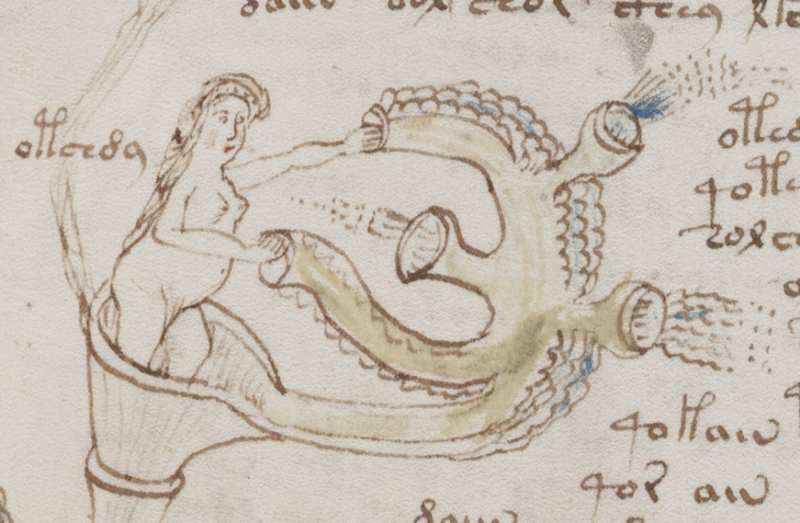
reachfar.org – The Voynich Manuscript, a mysterious and intricate codex discovered in 1912 by antique book dealer Wilfrid Voynich, has captivated the imagination of cryptographers, historians, and enthusiasts for over a century. Bound in vellum and adorned with an array of botanical, astronomical, and pharmacological illustrations, the manuscript is written in an unknown script and language that has defied all attempts at decipherment. This article delves into the history, content, and ongoing mystery of the Voynich Manuscript, exploring the various theories and efforts to crack its cryptic code.

The Manuscript’s Discovery and Description:
Wilfrid Voynich, a Polish book dealer, purchased the manuscript from the Jesuit College at the Villa Mondragone in Frascati, Italy. The book’s origins are shrouded in mystery, but it is believed to have been owned by Emperor Rudolf II of Germany, who purchased it from alchemist John Dee in the late 16th century. The manuscript consists of about 240 pages, some of which are missing, and is divided into several sections, including botanical, astronomical, biological, and cosmological illustrations, as well as a section of “recipes” or “pharmaceuticals.”

The Cryptic Script:
The manuscript’s script is unlike any known writing system, featuring a combination of rounded and angular characters. The text is written from left to right and appears to be divided into “words,” but it does not correspond to any known language or code. The script’s unique nature has led to numerous theories about its origin, including suggestions that it is an elaborate hoax, a forgotten language, or a complex cipher.

Attempts at Decipherment:
Over the years, many have tried to decode the Voynich Manuscript, including professional cryptographers from both World Wars, as well as amateurs and scholars. The manuscript has been subjected to a variety of decipherment techniques, from traditional cryptographic analysis to modern computational methods. Despite these efforts, no one has successfully translated the text, leading to ongoing debates about whether the manuscript is a sophisticated code, a linguistic enigma, or simply a medieval forgery.

Theories and Speculations:
Several theories have been proposed regarding the manuscript’s purpose and origin. Some believe it to be a coded scientific text from the Renaissance, while others suggest it could be a religious document or a work of fiction. There are even theories that it is an alien text or a product of a lost civilization. The illustrations, which depict unfamiliar plants, star charts, and human figures in various poses, have also been the subject of much speculation, with some suggesting they hold the key to understanding the text.

Modern Approaches:
With advancements in technology, researchers have applied new methods to the study of the Voynich Manuscript. Carbon dating has confirmed that the vellum dates back to the early 15th century, supporting the manuscript’s authenticity. Multispectral imaging has revealed hidden text and drawings, providing additional clues. Machine learning and artificial intelligence are now being used to analyze the text, offering hope that one day the manuscript’s secrets may be revealed.

Conclusion:
The Voynich Manuscript remains one of the most perplexing puzzles in the history of cryptography. Its cryptic script and enigmatic illustrations continue to challenge and intrigue those who study it. Whether it is a sophisticated code, a lost language, or an elaborate hoax, the manuscript stands as a testament to the enduring human fascination with mystery and the relentless pursuit of knowledge. As long as the Voynich Manuscript remains untranslated, it will continue to inspire new generations of researchers, each hoping to be the one who finally cracks its elusive code.